

Mirrors, apart from being useful to reflect ourselves, are widely used in interior design to create an effect of spaciousness when the space is small. However, Feng Shui takes a step a bit further and states that it is good to place them in areas where you want to duplicate the good energy.
And what are the areas of the house with very good energy? For example, place a mirror that reflects the dining table, the food would be duplicated so we will always have to eat in our homes. The lounge is usually a very good place as well; look at the photos that have brought you today about a house in Marseille. Isn’t it a lovely effect?
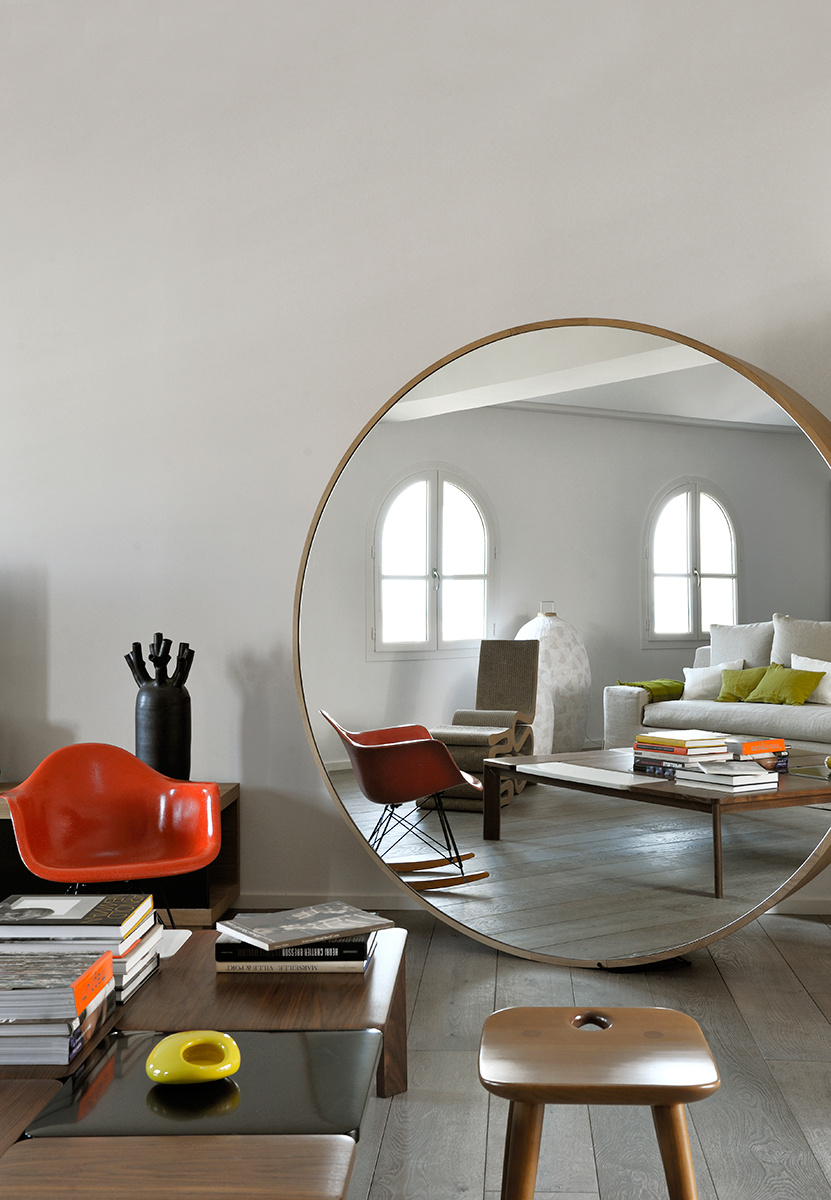
We also have to be careful where to place a mirror, not every corner is good for mirrors in feng shui.
Where you shouldn’t place a mirror:
- Never facing the bed: being reflected in a mirror during the sleep causes is not good for good rest. Unconsciously the nervous system is on alert because is like having someone watching us while we sleep, even though we are ourselves.
- Never facing a door or window: the energy coming through the door or window goes back towards outside.
- Never facing the hob plate: my teacher told me as a curiosity and I’ll tell you as well because it means a way to foster a possible infidelity in your couple. The reflection of the person who is cooking is as if there were two women at home and if in your house is the man who cooks, two men.
- Do not use mirrors fragmented: the use of decorative mirrors into squares or other shapes are not recommended because they distort reality they reflect.
I find it fascinating everything about mirrors. By the way, have ever you heard about the mirror effect? That’s another story but very interesting too. Big kisses!
* Photos: AD, by Henri del Olmo